
Custom Paver Patios · Northville First · Plymouth Second
Patio Paver Installation in Northville & Plymouth, MI
Plan a patio around how you actually want to live outside. Blackstone Landscaping designs and builds paver patios with careful attention to layout, grade, drainage, materials, transitions, and the details that make the finished space feel like part of the home.
★★★★★ 4.8 Google rating · 32 reviews “Outstanding work! On time, on budget, no hassle and looks great.” — David C. “The work was done on time and everyone was very professional.” — Monica P. “The fellas work hard and communicate well.” — Pat P. “You have a very efficient, competent and kind crew.” — Denise ★★★★★ 4.8 Google rating · 32 reviews “Outstanding work! On time, on budget, no hassle and looks great.” — David C. “The work was done on time and everyone was very professional.” — Monica P.
Start With The Space
A Better Patio Starts With a Better Plan
A paver patio should do more than fill a rectangle behind the house. The strongest designs begin with the way the space will be used, then work backward into size, shape, circulation, material, grade, edges, steps, lighting, walls, and surrounding landscaping.
For some Northville homeowners, the goal is a comfortable dining area close to the kitchen door. Others want a larger backyard gathering space with room for lounge furniture, a fire feature, a cooking zone, or a connection to a walkway and landscaped beds. Plymouth properties may have the same goals but different lot sizes, drainage patterns, existing concrete, access constraints, or relationships to mature trees and neighboring yards.
That is why patio planning should begin on the property. Blackstone can review where people enter the space, how furniture will fit, where water currently moves, how the patio relates to doors and existing steps, and what surrounding features should stay, move, or be integrated. The objective is a finished outdoor room that is useful on ordinary days, not just photogenic for ten minutes after installation.
- Dining, grilling, conversation, lounging, or mixed-use layouts
- Connections to doors, walkways, lawns, gardens, and driveways
- Sun, shade, privacy, views, trees, and existing landscape features
- Furniture clearances and comfortable walking paths
- Grade, drainage, thresholds, steps, and transitions
Paver & Material Choices
Choose the Look, Texture, Scale, and Pattern That Fit the Home
There is no single “best” patio paver for every property. Material selection should balance the architecture of the house, the scale of the patio, the intended use, maintenance expectations, budget, and the visual character you want.
Concrete Pavers
Available in many sizes, shapes, textures, and color blends. They can support traditional or contemporary designs and can be arranged in simple layouts or mixed-size patterns. Product selection should be based on the actual patio application and manufacturer requirements.
Brick & Brick-Style Pavers
Brick tones can create a classic look that works naturally with many Southeast Michigan homes. Borders, soldier courses, and contrasting field patterns can help define the patio without making the design busy.
Natural Stone Options
Natural stone can bring variation in color, texture, and edge character. It often works well when the goal is a more organic or established appearance, especially when the patio connects to planting beds, stone walls, or mature landscaping.
Details That Make It Work
Layout, Borders, Steps, Walls, Lighting, and Outdoor Living Features
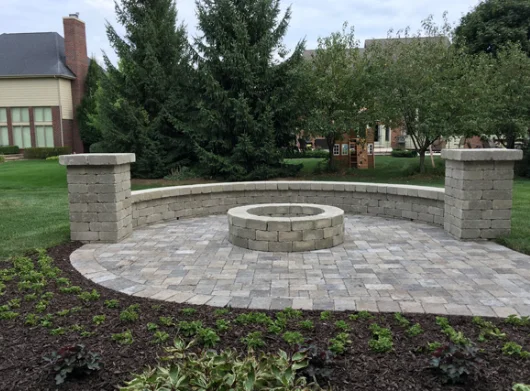
The patio surface is only one part of the design. Blackstone’s existing portfolio and service pages show patios combined with steps, retaining or seating walls, lighting, fire features, and cooking areas. These elements should be planned as one project when they are part of the homeowner’s goal.
Borders & Inlays
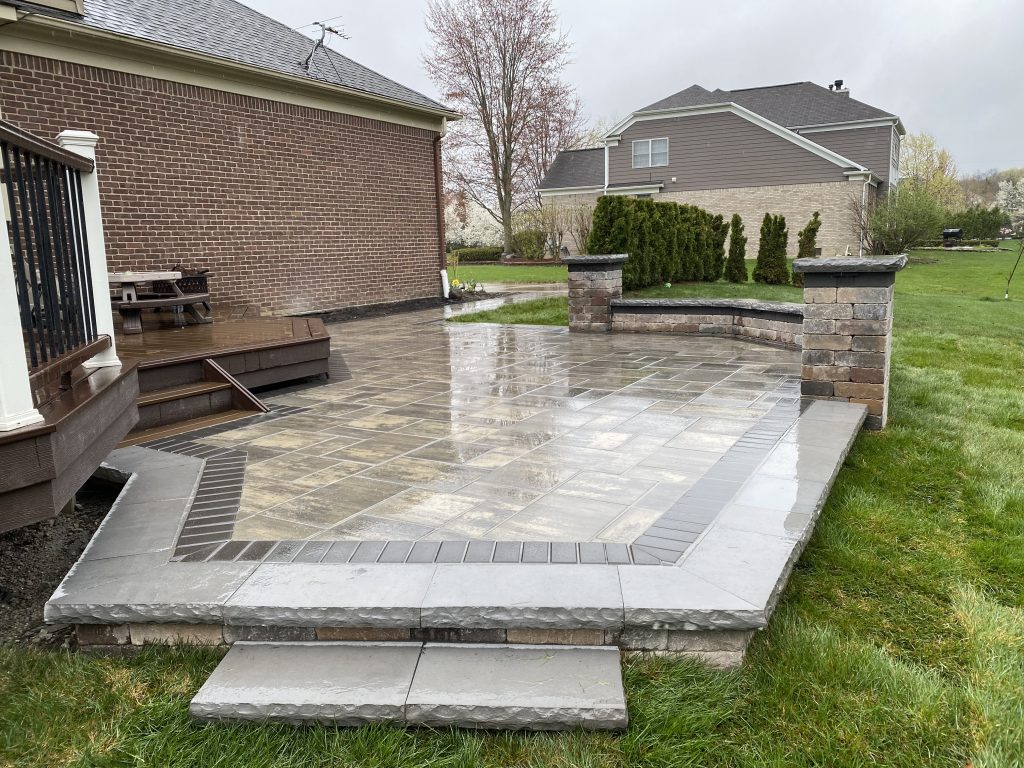
A contrasting edge can frame the field pavers, strengthen the shape, and tie the patio to brick, siding, roof tones, or nearby hardscape.
Steps & Landings
Where door elevations or grade changes require steps, the dimensions and transitions should be planned early so the patio feels intentional rather than patched together.
Seating & Retaining Walls
Walls can define the edge of an outdoor room, respond to grade changes, provide informal seating, or connect a patio to surrounding landscape structure.
Lighting & Features
Low-voltage lighting, fire features, grill or cooking areas, and other upgrades can be considered when they fit the project scope and are confirmed in the written proposal.
Installation Fundamentals
Site Preparation, Base, Compaction, Grade, and Drainage Matter
A durable paver patio depends on what happens below and around the finished surface. Decorative pavers cannot compensate for poor preparation, weak edges, or careless elevations.
The exact construction approach should match the property, paver system, soil conditions, elevations, intended use, and manufacturer requirements. In practical terms, patio construction generally involves removing unsuitable material, preparing and compacting a stable aggregate base, creating an appropriate bedding layer, setting the pavers to the planned layout and elevations, securing the perimeter, filling the joints with the specified joint material, and checking the final surface.
Grade is especially important next to the house. Water should not be encouraged toward foundations, door thresholds, siding, or low areas where it can collect. Existing downspouts, swales, walks, planting beds, neighboring grades, and drainage patterns should be considered before the patio elevation is finalized. If the property has a drainage problem that extends beyond ordinary surface grading, that issue should be identified before the patio is built rather than buried beneath new hardscape.
Blackstone’s public reviews and project descriptions repeatedly mention paver and hardscape work, site coordination, and completed Northville and Plymouth patio projects. The design conversation should turn those broad capabilities into a written, property-specific scope.
What should be clear in the proposal?
- Patio footprint and general dimensions
- Selected material and pattern
- Borders, steps, wall, lighting, or feature scope
- How existing materials or structures are handled
- Drainage or grading items included in the work
- Site access, cleanup, and restoration expectations
Clear scope is where “value” lives. Not in a page title promising cheap pavers to everyone with a browser.
Michigan Conditions
Planning for Freeze, Thaw, Rain, Snowmelt, and Seasonal Use
Southeast Michigan patios live through hot summers, hard freezes, spring saturation, snowmelt, and repeated freeze-thaw cycles. That makes drainage, base preparation, edge stability, and maintenance more than technical footnotes.
Freeze & Thaw
Movement risk increases when water reaches susceptible soils or an unstable base and then freezes. A well-planned paver system is designed as a layered assembly, not simply pavers placed over dirt.
Water Management
Patio elevations should work with the house and the rest of the yard. Surface water needs a practical route away from vulnerable building areas and away from places where repeated ponding would undermine use or appearance.
Seasonal Care
Routine sweeping, joint maintenance, stain cleanup, and attention to any isolated movement can help keep a patio looking finished. Sealing is material- and goal-dependent, not a universal mandatory schedule.
Repair or Start Over?
New Patio Installation vs. Repair and Reset
A patio that looks tired does not automatically need complete replacement. Paver systems have an advantage: individual areas can sometimes be lifted, corrected, and reset when the material itself is still serviceable.
Repair or Reset May Make Sense When
The issue is limited to isolated settlement, a small low spot, loose or missing joint material, edge movement, or a section disturbed by another project. The existing layout still works, the pavers remain in acceptable condition, and the underlying problem can be corrected without rebuilding the entire patio.
Replacement May Make More Sense When
Problems are widespread, base failure is extensive, elevations or drainage need major correction, the patio is too small or poorly shaped for current use, or the homeowner wants a substantially different layout with new steps, walls, lighting, planting, or outdoor-living features.
Blackstone also maintains a separate brick repair service. Keep repair intent there, while this page remains focused on planning and building patio paver spaces.
The Design Process
From First Conversation to Finished Patio
Review the Property
Start with the location, existing patio or yard, access, elevations, drainage, doors, trees, utilities, adjacent landscaping, and the way you want to use the space.
Define the Scope
Choose the patio size, shape, material direction, pattern, borders, steps, walls, lighting, planting connections, and any confirmed outdoor-living features.
Build and Finish
Complete the site work and paver installation to the agreed scope, then review the finished area, cleanup, transitions, and basic care expectations.
Real Blackstone Work
Patio Projects in Northville, Plymouth, and Nearby Southeast Michigan
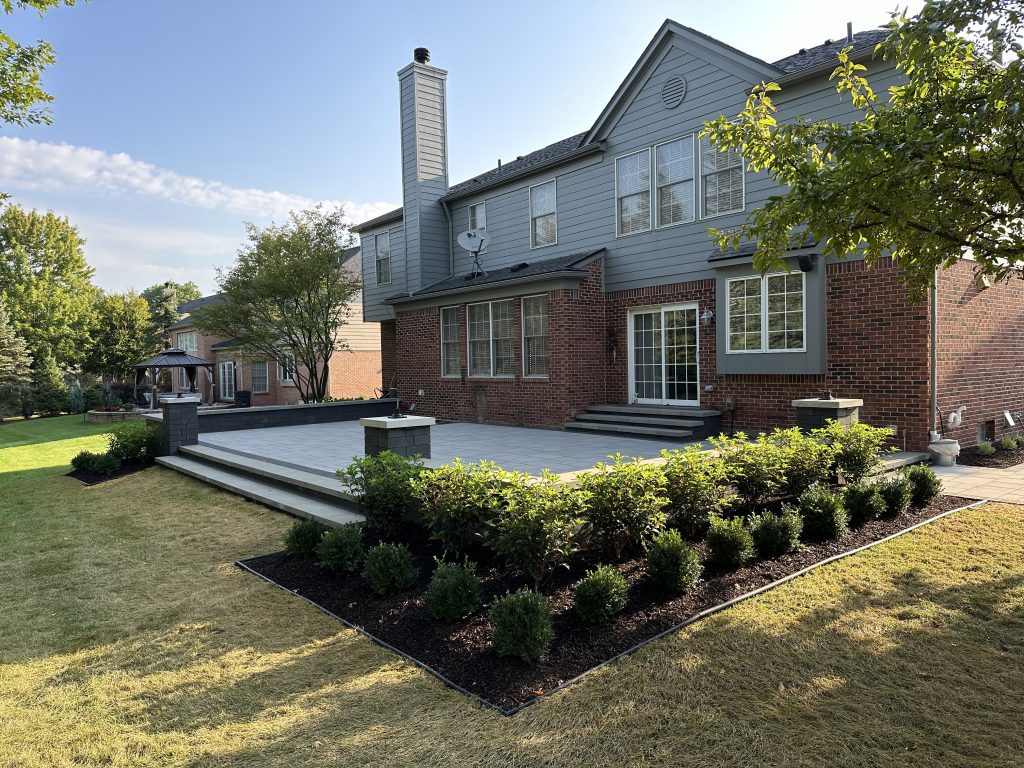
Blackstone’s live portfolio includes multiple Northville patios, a Northville renovation-and-patio project, Plymouth patio projects, and patios in nearby communities. Use those real jobs as the proof. There is no need to manufacture glossy AI patios when the company already has the actual work.
Northville Trust Block
Blackstone Landscaping’s Northville Base
Northville is the first geographic priority for this page and one of Blackstone Landscaping’s two core markets. The current Google business listing shows BLACKSTONE LANDSCAPING, INC. with a 4.8-star rating and 32 reviews, using (248) 939-3600.
P.O. Box 824, Northville, MI 48167
Local Patio Service
Northville First. Plymouth Second. Nearby Projects by Fit and Availability.
Blackstone’s current service-area hub identifies Northville and Plymouth as the core markets and lists nearby communities that may be served depending on the project, season, schedule, and property location.
Northville, MI
Primary market for patio paver design, hardscapes, walkways, retaining walls, landscaping, and outdoor lighting.
Plymouth, MI
Primary service market for patio pavers and broader landscaping work. No separate Plymouth office or GBP should be implied unless verified.
Nearby Southeast Michigan
Current site coverage includes communities such as Novi, Livonia, Canton, Farmington, Farmington Hills, South Lyon, Wixom, Westland, and Salem Township. Confirm availability for each project.
Build the Whole Outdoor Space
Related Blackstone Hardscape Services
Brick Pavers
Compare brick-style, concrete, stone, texture, scale, and pattern considerations before choosing the final patio surface.
Walkways & Steps
Connect the patio to side yards, front entries, gardens, driveways, or other outdoor areas with a deliberate path and transition.
Retaining Walls
Use walls where grade changes, terracing, visual structure, or separation between outdoor spaces is part of the landscape plan.
Outdoor Lighting
Extend safe, comfortable use of paths, steps, patios, landscape features, and architectural details after sunset.
Brick Repair
For an existing paver or masonry area that needs repair rather than a full new patio, start with Blackstone’s repair service.
Portfolio
Review actual Northville, Plymouth, Novi, and nearby projects before deciding which layout and style direction fits your property.
Patio Paver FAQs
Questions Northville & Plymouth Homeowners Ask
What should I think about before planning a paver patio?
Start with how the patio will be used, furniture and traffic flow, access from the house, sun and shade, grade, drainage, surrounding landscaping, and the amount of maintenance you want. Those decisions shape the layout and material choices.
Are paver patios a good fit for Michigan weather?
Paver systems can perform well in Michigan when the site, base, drainage, edges, and surface are planned and installed correctly. Repeated freeze-thaw cycles make preparation and water management especially important.
Do pavers need to be sealed?
Not every patio needs the same maintenance plan. Sealing may be useful for certain materials or homeowner goals, but timing and product choice should follow the specific paver system rather than a one-size-fits-all schedule.
Can an existing paver patio be repaired instead of replaced?
Sometimes. Localized settling, edge movement, or joint loss may be repairable when the existing pavers and overall layout are still worth keeping. Widespread base or drainage problems may point toward a larger rebuild.
Can my patio include steps, seating walls, lighting, or a fire feature?
Blackstone’s live portfolio and service pages show patios combined with steps, walls, lighting, fire features, and cooking areas. The exact features should be reviewed on site and included in the written project scope.
Do you install paver patios in both Northville and Plymouth?
Yes. Blackstone’s current service-area architecture identifies Northville and Plymouth as its two primary markets. Select nearby Southeast Michigan projects may also be considered based on location, scope, season, and availability.
How do I get a patio estimate?
Call or text (248) 939-3600 or use Blackstone’s estimate form with your city and a short description of the project.
How long does a paver patio project take?
Timing depends on the size of the patio, access, site conditions, weather, material availability, and whether the project includes steps, walls, lighting, or related landscaping. Scheduling expectations should be given after the property and final scope are reviewed.
Plan Your Patio
Ready to Build an Outdoor Space You’ll Actually Use?
Tell Blackstone where the property is located, what you want the patio to do, and whether you are starting from an open yard, an old patio, or a larger landscape renovation.